
Partner at AKD Lawyers
Practice Areas: Personal Injury
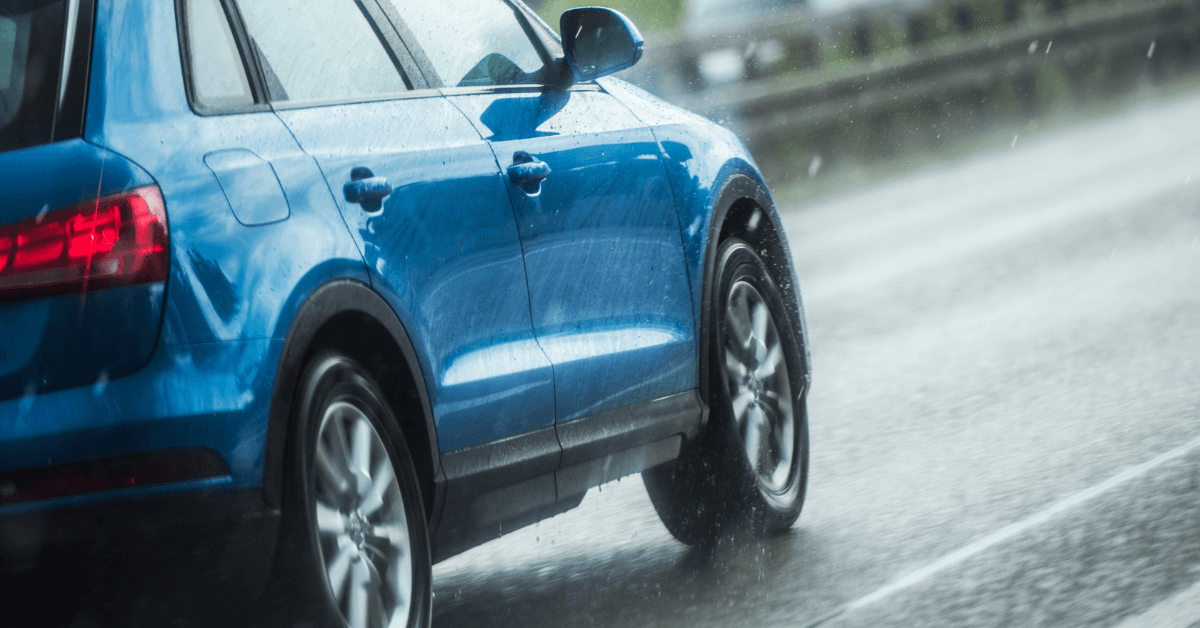
Weather conditions can change quickly across Louisiana. A clear road can become difficult to navigate within minutes as visibility drops and water begins collecting in low-lying areas.
That is when simple driving habits matter most. Slowing down, leaving more room between cars, and avoiding standing water can help you stay in control. If a rain-related crash does happen and there is a dispute over who was at fault, a New Orleans car accident litigation attorney can explain how Louisiana law may apply.
Why Rain Makes Louisiana Roads Risky
Rain does more than make the road wet. Tires have less grip, stopping takes longer, and it becomes harder to see cars, lane markings, and hazards ahead. Water collecting on the roadway can also cause a vehicle to hydroplane.
A driver’s choices during bad weather may come up if a crash leads to an injury claim. Under Louisiana’s comparative fault law, more than one person can share responsibility for an accident.
For crashes on or after January 1, 2026, someone who is 51% or more at fault cannot recover damages. Below that point, compensation is reduced according to the percentage of fault assigned.
Prepare Your Vehicle Before The Storm
A safer drive in heavy rain starts with a few basic checks before you leave.
- Tires. Check the tread and tire pressure. Worn or underinflated tires are more likely to lose traction on wet roads.
- Wipers. Replace blades that streak, skip, or leave parts of the windshield unclear.
- Lights. Make sure your headlights, brake lights, and turn signals work properly. Louisiana law requires headlights when windshield wipers are in use.
Hydroplaning can happen even at relatively low speeds when enough water builds up between the tires and the road. Worn tires can make that loss of traction more likely.
According to the NHTSA, hydroplaning can begin at speeds as low as 35 mph, especially on worn or underinflated tires.

Safe Driving Techniques in Heavy Rain
Heavy rain is not the time to drive the way you normally would. Slow down and give the car ahead more room.
A few things help:
- Ease off the accelerator instead of braking hard
- Leave at least five seconds between vehicles
- Keep your headlights on low beams
- Switch off cruise control until the road dries out
Hydroplaning can happen quickly when water builds up under the tires. If you feel the car starting to slide, lift your foot off the gas. Keep the wheel pointed where you want to go and avoid sudden braking.
| Factor | Recommended action |
|---|---|
| Hydroplaning risk (~35 mph) | Reduce speed, avoid puddles |
| Tread below 2/32″ | Replace tires promptly |
| Following distance in rain | Increase to 5+ seconds |
| Wiper lifespan | Replace every 6–12 months |
| Headlights with wipers | Required by Louisiana law |
Fault in Rain-Related Crashes
Rain does not automatically make a crash unavoidable. The bigger question is whether each driver responded reasonably to the conditions they could see.
Someone driving at the posted speed limit, for example, may still be going too fast if visibility is poor or water is covering the road.
Investigators and insurers may also look at following distance, braking, headlights, tire condition, and whether the driver ignored standing water or other obvious hazards.
Fault can also be shared. One driver might have been following too closely while another changed lanes without enough room. Louisiana’s comparative fault rules allow responsibility to be divided based on what each person did before the collision.
What to Do After a Rain-Related Crash
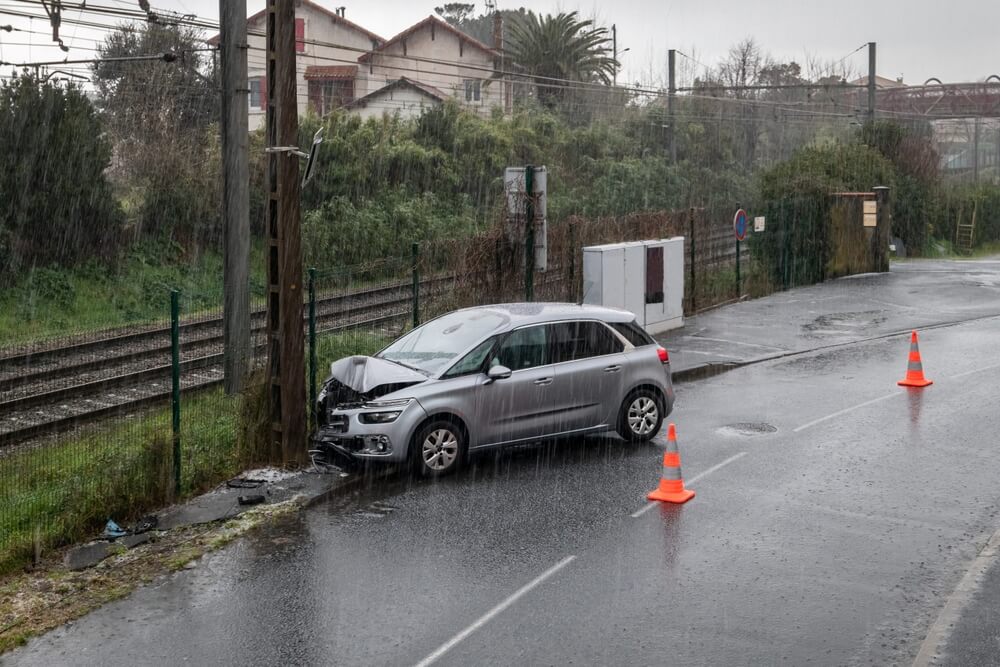
Get somewhere safe first. Move the vehicle out of active traffic if you can do so safely, then call 911. Before the weather changes, take a few photos. Get the road, standing water, vehicle damage, lane markings, and anything else that seems relevant. Ask witnesses for their names and contact details.
It is also worth writing down what you remember about the rain and visibility. By the time an insurance company reviews the crash, the road may look nothing like it did when the collision happened.
Get Your Free Consultation
Frequently Asked Questions
Why Are Louisiana Roads Dangerous in Heavy Rain?
Heavy rain can quickly reduce visibility and make pavement slippery. Standing water also increases the chance of hydroplaning, especially on roads where water collects faster.
How Can I Prevent Hydroplaning?
Slow down before reaching wet or flooded areas, avoid sudden braking, and keep your tires properly inflated with enough tread to maintain traction.
How Does Comparative Fault Apply in a Rain Crash?
Fault can be divided between drivers. Investigators may look at speed, following distance, visibility, tire condition, and whether each driver adjusted to the weather.
Are Headlights Required in the Rain in Louisiana?
Yes. Louisiana law requires headlights when your windshield wipers are in continuous use because of rain, even during the daytime.
What Evidence Helps After a Weather-Related Crash?
Photos of the road, standing water, vehicle damage, witness details, weather notes, and the police report can help show what conditions were like when the crash happened.
Talk to a New Orleans Car Accident Lawyer
Rain can make a crash harder to sort out, especially when both the weather and another driver’s actions may have played a role. If you were injured, Alvendia, Kelly & Demarest Law Firm can review what happened, explain how fault may be handled, and help you understand your next steps.
Call (504) 200-0000 for a free consultation or contact the firm online. No fee unless you win. Clients may be responsible for costs.
Reviewed by Roderick “Rico” Alvendia, Partner at Alvendia, Kelly & Demarest Law.


Categories

In 2003, after being dissatisfied with the quality of legal care for victims of car accidents, Roderick ‘Rico’ Alvendia sought to establish a new firm focused on providing high-quality legal services to aid injured victims and their families. J. Bart Kelly, sharing Rico’s passion for upholding justice, joined the firm later that year, and established a partnership.