
Associate at AKD Lawyers
Practice Areas: Personal Injury, Workers Compensation
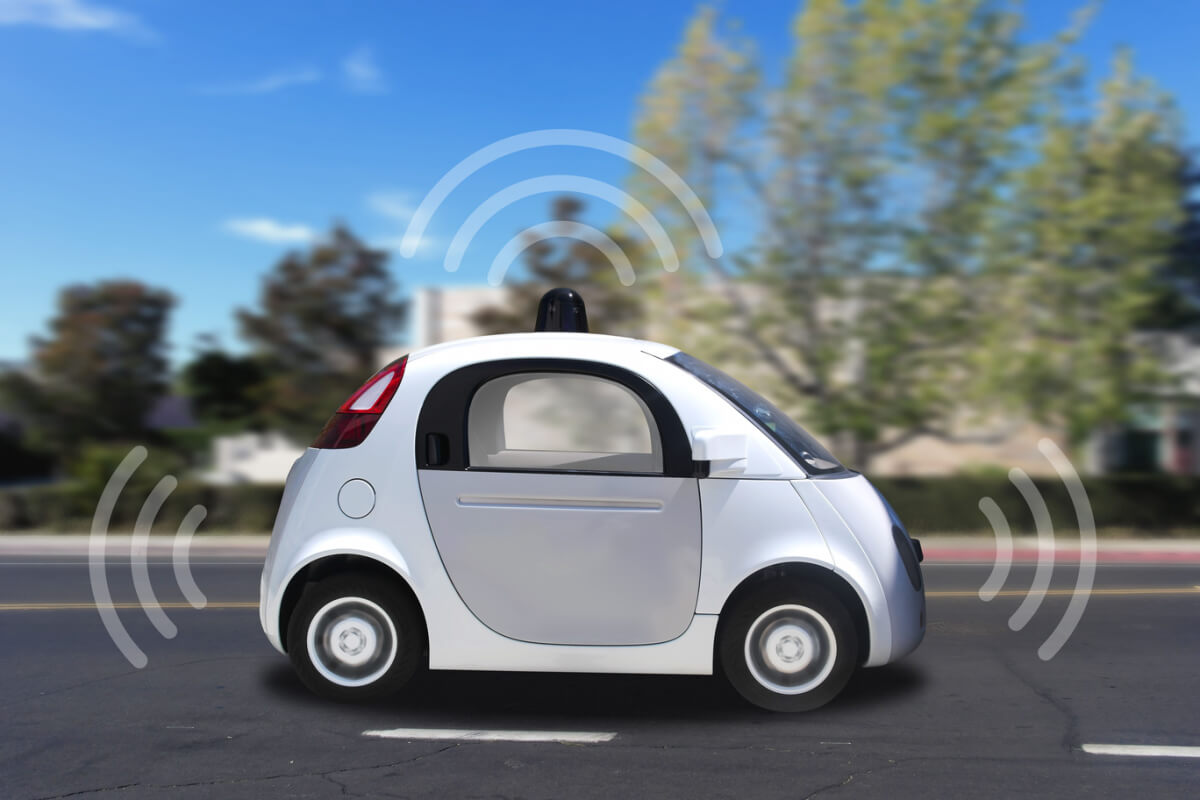
Self-driving cars are no longer just a futuristic idea. They’re being tested on roads across the country, and as this technology becomes more common, it’s changing the way we think about responsibility after an accident. Autonomous vehicles (AVs) promise safer roads by reducing human error, but they also raise complex legal questions.
When a self-driving car causes an accident, who is at fault: the driver, the carmaker, or the software developer? These are not easy questions to answer, and they’re reshaping personal injury law in important ways. This article explores how liability, insurance, and safety standards are evolving in this new age of automation.
Evolving Liability in Autonomous Vehicle Accidents
Traditional car accident claims revolve around human negligence. If a driver was speeding or distracted, they were typically held responsible. With autonomous vehicles, however, the focus shifts to the technology controlling the car.
Liability in an AV crash can fall on multiple parties:
- Manufacturers, if a mechanical or sensor failure caused the crash.
- Software developers, if an algorithm misinterpreted road data or made a faulty decision.
- Vehicle owners, if they neglected software updates or maintenance.
- Third-party service providers, such as mapping or cloud data companies, if their systems malfunctioned.
The law now goes beyond proving driver negligence. It must determine whether a system defect, software malfunction, or design flaw caused the crash, shifting the focus toward product liability, which holds companies responsible when their technology causes harm.
“Autonomous vehicles have the potential to reduce human errors, but liability remains a key challenge in personal injury claims involving self-driving technology.” – National Highway Traffic Safety Administration (NHTSA)
High-profile cases like the 2018 Uber self-driving car fatality in Arizona show how complex these claims can be. Car accident attorneys and legal professionals nationwide are closely watching how responsibility is divided between human oversight and artificial intelligence.
The Role of Artificial Intelligence and Data Evidence
Artificial intelligence makes millions of real-time decisions every second when an autonomous car is on the road. When an accident occurs, these digital “thoughts” become crucial evidence. Modern AVs use event data recorders (EDRs) similar to airplane black boxes to capture details like speed, braking, steering, and sensor input.
These records allow investigators to recreate the incident accurately and determine whether a human or a system malfunction was to blame. However, this introduces questions about data ownership and privacy. Who controls the data? Should it be available to insurers or attorneys during investigations?
As courts begin to rely more on data-driven evidence, personal injury attorneys will need a deeper understanding of technology and how AI systems make decisions during a crash.

Product Liability and Regulatory Framework
As self-driving technology grows, so does the importance of product liability law. Under this concept, a company can be held responsible for injuries caused by defects in its product.
For autonomous vehicles, this can mean:
- Faulty sensors that fail to detect obstacles
- Software bugs that misinterpret traffic signals
- Poor system design that leads to unsafe maneuvers
Federal agencies like the NHTSA are still drafting clear guidelines for AV safety. In Louisiana, the comparative fault system further complicates matters. If both the human occupant and the automated system share responsibility, compensation can be reduced based on each party’s level of fault.
Because regulations differ across states, national consistency is still developing. This uncertainty keeps personal injury law in a constant state of adjustment as technology evolves.
Insurance and Risk Models in the Age of Automation
Traditional car insurance focuses on the driver’s age, record, and experience. Autonomous vehicles challenge that idea by shifting risk from the driver to the manufacturer or software developer.
Insurers are testing new product-based and hybrid policies that cover both human error and system malfunctions, depending on how the vehicle operates.
|
Aspect |
Traditional Vehicles |
Autonomous Vehicles |
| Primary Liability | Human driver negligence | Manufacturer or software error |
| Fault Evidence | Police reports, witness statements | AI data logs, sensor recordings |
| Insurance Type | Driver-based policy | Product or system-based coverage |
| Common Claims | Distracted or impaired driving | Software bug, sensor malfunction |
This change may reduce premiums for safer systems but increase accountability for technology companies.

Privacy, Safety, and Ethical Considerations
Autonomous vehicles collect constant data about roads, traffic, and surroundings to navigate safely. While this improves performance, it raises growing privacy concerns about who owns and controls that information.
When an accident occurs, questions arise: who can access this data, and can it be shared with insurers or law enforcement? With few clear regulations, debates over data rights and security continue.
Pedestrian and cyclist safety is another major issue. Although AVs can react faster than humans, sensors sometimes misread unpredictable movement.
“Autonomous systems promise fewer accidents, but they introduce new safety risks for pedestrians and cyclists when sensors misinterpret human movement.” – Insurance Institute for Highway Safety (IIHS), 2025
As technology advances, lawmakers must balance innovation with strong safety and privacy standards to protect everyone on the road.
The Future of Personal Injury Law
The introduction of autonomous vehicles signals one of the biggest shifts in personal injury law in decades. Liability is moving away from human mistakes and toward digital accountability. Attorneys will increasingly analyze data, software updates, and design defects rather than traffic violations.
Future claims may involve algorithmic accountability or digital negligence, where companies must prove that their systems acted reasonably under the circumstances. The role of lawyers, regulators, and insurers will continue to evolve as new types of evidence and claims emerge.
As this transformation unfolds, understanding these trends will be essential for drivers, consumers, and legal professionals alike.
FAQs
Who is responsible if a self-driving car causes an accident?
Liability depends on the cause — a system defect, human oversight, or manufacturer error may all share responsibility under product liability laws.
How do event data recorders help in AV accident investigations?
They capture speed, braking, and AI decisions, giving investigators clear, objective data about how the crash occurred.
Are current insurance laws prepared for autonomous vehicle claims?
Not fully. Insurers are testing hybrid models that combine driver and manufacturer coverage.
What role do privacy laws play in AV-related injury cases?
They determine who can access or use the car’s operational data during investigations and litigation.
Can victims still file a personal injury claim in AV crashes?
Yes. Claims may fall under product liability or negligence depending on the cause of the accident.
Conclusion
Autonomous vehicles are changing the foundation of personal injury law. Fault is no longer limited to human error; it now includes software developers, system designers, and manufacturers. As self-driving cars become more common, understanding how laws, insurance, and ethics adapt is essential for public safety.
If you or someone you know has been injured in an accident involving an autonomous or self-driving vehicle, the legal process can be complex. Alvendia, Kelly & Demarest Law Firm can guide you through your options and help you understand your rights.
Contact our team for a free consultation to learn more about how these emerging laws may apply to your case.

Categories
In 2003, after being dissatisfied with the quality of legal care for victims of car accidents, Roderick ‘Rico’ Alvendia sought to establish a new firm focused on providing high-quality legal services to aid injured victims and their families. J. Bart Kelly, sharing Rico’s passion for upholding justice, joined the firm later that year, and established a partnership.