
Partner at AKD Lawyers
Practice Areas: Personal Injury, Insurance Claims
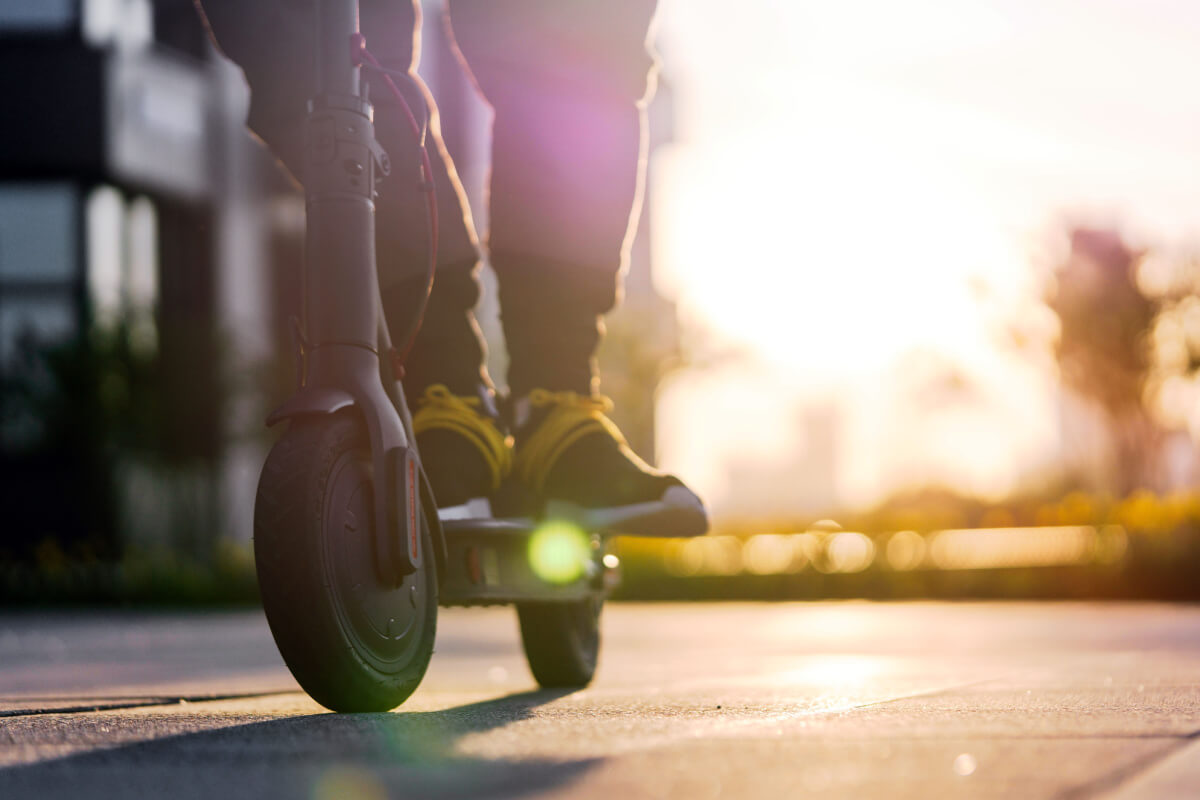
Electric scooters have become part of everyday life in Louisiana, especially in busy areas of New Orleans where people use them to move through traffic or explore crowded streets. Their convenience is appealing, but the rise in e-scooter usage has also brought more accidents and questions about who is responsible when something goes wrong.
This guide explains why e-scooter crashes happen, the injuries they often cause, how Louisiana handles liability, and what riders and pedestrians should know after an incident. Everything here is informational and written to help you understand how these accidents are handled under state laws like comparative fault.
Why E-Scooter Accidents Are Becoming More Common
E-scooter accidents can happen in many ways, and most involve a mix of rider behavior, road conditions, and traffic situations. As more shared scooters appear in urban areas, these risks increase.
Rider behavior issues
Many crashes involve choices the rider makes while navigating busy streets. Speeding through traffic, ignoring signals, riding unpredictably, or weaving between cars can easily lead to a fall or collision. New riders are especially vulnerable because they may not understand how fast scooters accelerate or how sharply they turn.
Roadway and environmental hazards
E-scooters are lightweight, so even small hazards can cause a loss of balance. Uneven pavement, loose gravel, potholes, metal plates, and unclear markings are common contributors. Poor lighting at night also reduces visibility for both riders and drivers.
Equipment or mechanical failures
Shared scooters experience heavy daily use. When maintenance is overlooked, riders may face problems such as weak brakes, battery failure, stiff throttles, loose handlebars, or worn wheels.
Motorist and pedestrian involvement
Drivers sometimes overlook e-scooters because they are small and quiet. Dooring incidents, sudden turns, and blind-spot collisions are common. Pedestrians can also play a role when stepping into the street unexpectedly or crossing between parked cars.
According to a CDC study, e-scooter injury rates increased by more than 220 percent between 2014 and 2020, especially in dense urban areas.
Injury Patterns Seen in E-Scooter Crashes
Because scooters provide little protection, injuries can be serious even at low speeds. Riders typically fall forward, which often leads to injuries of the hands, face, shoulders, and head.
Common injuries include:
- Sprains, cuts, and abrasions
- Fractured wrists, shoulder injuries, and facial trauma
- Head or spinal injuries when riders are not wearing helmets
Research published in JAMA reports that nearly 40 percent of electric scooter injuries involve head trauma, highlighting how vulnerable riders can be.
Many incidents also involve multiple injuries at once, and recovery can take time depending on the severity.
Understanding Liability in E-Scooter Accidents
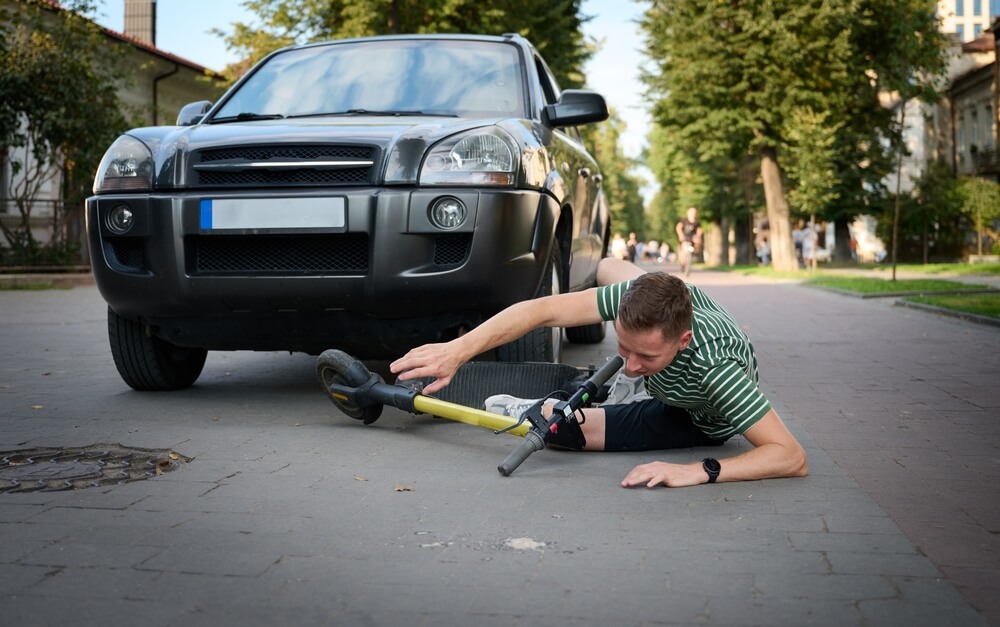
One of the most challenging parts of an e-scooter crash is determining who is at fault. Several parties may share responsibility depending on what happened before and during the collision.
Rider responsibility
Riders may be responsible if they ignored signals, rode against traffic, made unsafe turns, or operated the scooter without paying attention to their surroundings.
Motorist liability
Drivers can be responsible if they did not check mirrors, opened a car door into the rider’s path, failed to yield, or made a quick turn without noticing nearby scooters.
Pedestrian contribution
Pedestrians sometimes step into bike lanes or crossing areas unexpectedly, leading to sudden reactions and collisions. In these situations, pedestrian behavior is evaluated as part of the overall incident.
Equipment manufacturers and rental companies
If the scooter had a mechanical defect related to poor inspection or maintenance, the rental company or manufacturer may share responsibility for the accident.
Local government factors
If a crash happened because of a pothole, broken pavement, or missing signs, the condition of public roads may be considered. These cases depend heavily on whether the hazard was known or should have been repaired.
Under Louisiana Civil Code Article 2323, each party in an accident is assigned a percentage of fault, and compensation is adjusted based on that percentage.
Get Your Free Consultation
Rental Agreements and Their Limitations
Every shared scooter company requires riders to accept terms and conditions before unlocking the device. These agreements often include waivers, disclaimers, and arbitration clauses. While riders accept many risks, these terms are not absolute.
Many rental scooter user agreements contain liability waivers, but these provisions may not apply when mechanical defects or poor maintenance contribute to an accident.
In situations where faulty equipment played a role, waivers may be limited by Louisiana law. The key is determining whether the company failed basic safety or maintenance duties.
How Insurance Factors Into E-Scooter Accidents
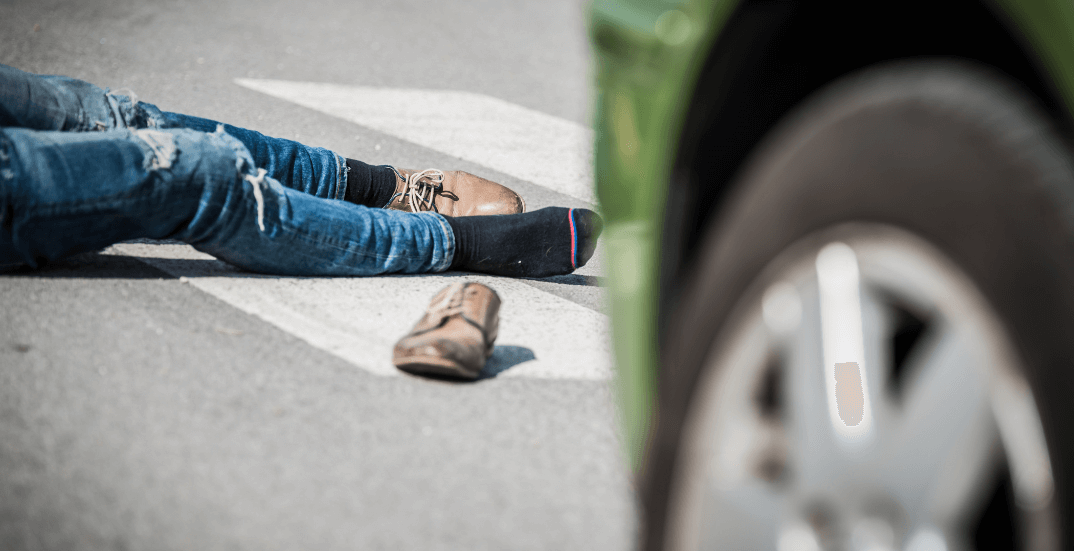
Insurance coverage for e-scooters is often confusing because many policies do not clearly address electric scooters. Riders should understand the general possibilities.
- Most auto insurance policies exclude e-scooters, but the driver’s policy may apply if the driver caused the collision.
- Health insurance usually covers medical treatment from an e-scooter injury.
- Homeowners or renters insurance may cover property damage in some situations.
- Rental companies rarely provide medical or liability coverage.
Coverage varies widely, so understanding your own policies can help you know what type of expenses may be covered.
Recommended Steps After an E-Scooter Accident
If you are involved in an e-scooter crash, documenting the event can help clarify what happened. Helpful steps include taking photos of the scooter, road hazard, and any vehicles involved, gathering witness names, noting weather and lighting conditions, and saving medical or repair records.
Reporting the incident to the rental company and police is also useful when reconstructing events.
Below is a simple overview of common accident scenarios.
|
Scenario |
Contributing Factor |
Potentially Responsible Party |
| Dooring incident | Driver opens door without checking | Vehicle driver |
| Pothole crash | Unrepaired road hazard | Local municipality |
| Brake failure | Poor maintenance or worn parts | Rental company or manufacturer |
| Pedestrian collision | Pedestrian steps out suddenly | Pedestrian or shared fault |
| Sudden turn by vehicle | Driver fails to notice scooter | Vehicle driver |
FAQs
What factors most often lead to e-scooter accidents in Louisiana?
Common causes include rider behavior, road hazards, mechanical issues, and sudden movements by drivers or pedestrians in busy areas.
How does Louisiana determine fault after an e-scooter crash?
Investigators review each person’s actions and assign percentages of fault based on Louisiana’s comparative fault rules.
Can a rental scooter company be responsible if the scooter malfunctions?
Yes, if poor maintenance or a mechanical defect contributed to the crash despite waiver language in the user agreement.
Does insurance cover injuries from an e-scooter accident?
Coverage varies, but health insurance and a driver’s liability insurance may apply depending on how the accident happened.
What documentation should be gathered after an e-scooter crash?
Scene photos, hazard images, witness details, medical records, and a report to the rental company help document the event.
Conclusion
E-scooters offer flexibility in crowded areas, but accidents can involve multiple factors including rider behavior, road conditions, mechanical issues, and traffic interactions. Understanding how Louisiana’s comparative fault system works, how liability is evaluated, and what steps to take after a crash can help you make informed decisions.
If you were involved in an e-scooter accident and want to understand your options under Louisiana law, you can speak with a team member at Alvendia, Kelly & Demarest Law Firm. A New Orleans personal injury attorney can review your situation, explain how liability may apply, and help you understand the next steps.
You can request a free consultation to discuss your circumstances and learn more about your rights.


Categories

In 2003, after being dissatisfied with the quality of legal care for victims of car accidents, Roderick ‘Rico’ Alvendia sought to establish a new firm focused on providing high-quality legal services to aid injured victims and their families. J. Bart Kelly, sharing Rico’s passion for upholding justice, joined the firm later that year, and established a partnership.