
Partner at AKD Lawyers
Practice Areas: Personal Injury, Insurance Claims
Lane splitting has always been a debated topic among motorcyclists. It’s the practice of riding between lanes of slow or stopped traffic to move ahead faster. While some riders see it as a way to stay safe from rear-end collisions, others and most state laws see it as a risky move. In Louisiana, lane splitting is explicitly illegal, which means it can influence how motorcycle accident claims are handled.
This guide explains what Louisiana law says about lane splitting, how fault and compensation work, and what evidence matters most after an accident.
What Louisiana Law Says About Lane Splitting
In Louisiana, lane splitting is against the law. The rule is written under Louisiana Revised Statute RS 32:191.1, which states that operating a motorcycle between lanes of traffic is prohibited.
This rule aims to keep all vehicles in predictable positions on the road, reducing the chance of collisions caused by sudden lane changes.
According to Louisiana Revised Statute RS 32:191.1, motorcyclists are prohibited from operating between lanes of traffic. This law directly affects how fault is determined after an accident.
It’s important to note that lane filtering where riders move to the front of traffic at a stoplight is also not recognized under Louisiana law. Both actions can lead to citations if spotted by law enforcement.
Some riders argue that lane splitting helps prevent rear-end crashes, especially in slow-moving traffic. However, Louisiana prioritizes safety consistency over flexibility.
Unlike California, where lane splitting is allowed under specific conditions, Louisiana treats it as a traffic violation that can affect your insurance and liability in a crash.
How Lane Splitting Impacts Fault and Compensation
Being cited for lane splitting doesn’t automatically mean you can’t file a claim. Louisiana follows a comparative negligence system under Civil Code Article 2323, meaning fault is shared between all parties involved.
Even if you’re partially at fault, you can still recover damages based on your percentage of responsibility.
Under Louisiana’s comparative negligence law, a person can still recover damages even if partially responsible, though recovery is reduced by their percentage of fault.
For example, if you were lane splitting and the court finds you 30% at fault while the other driver was 70% at fault, you could still recover 70% of your total damages.
However, insurance adjusters often try to use the lane splitting violation to lower payouts. They may argue that riding between cars increases the risk of collision. Having strong evidence like traffic camera footage or witness statements can make a major difference.
When investigating accidents, insurers consider:
- Whether lane splitting directly caused the crash
- The rider’s behavior and caution before the impact
Even though lane splitting is illegal, every case depends on its circumstances. Some riders lane split briefly to avoid immediate danger, like a car swerving or sudden braking. These details matter when determining how much compensation can still be pursued.
Evidence and Investigation in Lane Splitting Accidents
After a motorcycle accident involving lane splitting, clear evidence becomes the deciding factor. Insurance companies and opposing drivers will look for proof showing how the crash happened and who contributed most to it.
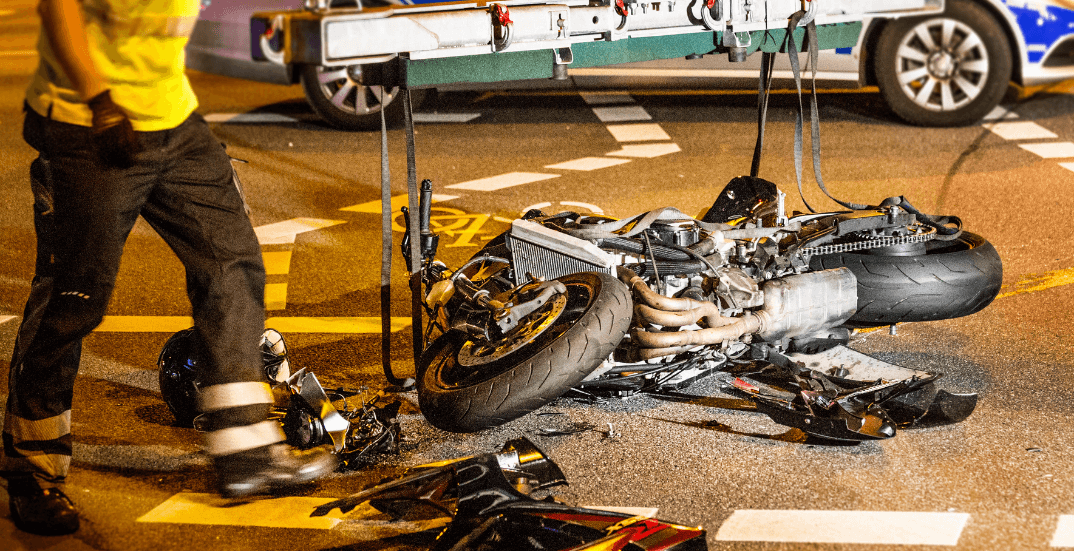
Accident investigators often analyze skid marks, lane positions, and impact points to determine whether a motorcyclist was operating between lanes at the time of collision.
Key forms of evidence include:
- Police reports noting if lane splitting occurred
- Dashcam or traffic camera footage showing the events
- Eyewitness statements describing the rider’s behavior
- Photos of vehicle damage that align with side-impact patterns
Working with an experienced legal team helps ensure the right evidence is preserved and presented properly. New Orleans motorcycle accident lawyers familiar with comparative negligence laws often collaborate with investigators to clarify how fault is divided in complex cases.
Get Your Free Consultation
Common Misconceptions About Lane Splitting and Claims
Many motorcyclists assume that lane splitting automatically voids their right to compensation. That’s not true. Even if you violated a traffic law, Louisiana’s comparative negligence system allows for shared responsibility.
Some also believe lane splitting is the same as lane filtering, but they are different. Lane splitting means moving between moving vehicles, while lane filtering usually involves passing stopped cars at an intersection. Both are unsafe and illegal in Louisiana.
There’s another misconception that a lane-splitting ticket makes a rider fully at fault. Fault is determined by the entire set of facts, not just one citation. If another driver was distracted or failed to yield, they can still share the blame.
Studies suggest lane splitting can reduce rear-end collisions, but Louisiana law prioritizes uniform traffic flow over this potential benefit.

Comparison of Lane Splitting Laws Across States
Lane splitting laws vary widely across the U.S. Here’s how Louisiana compares to other major states:
|
State |
Lane Splitting Legality |
Key Notes |
| Louisiana | Illegal | Explicitly prohibited under RS 32:191.1 |
| California | Legal under conditions | Only U.S. state that allows it |
| Texas | Not clearly defined | Ambiguous; rarely enforced |
| Florida | Illegal | Statewide prohibition |
| New York | Illegal | Prohibited under state law |
Louisiana remains one of several states that fully prohibits lane splitting, contrasting with California’s conditional allowance based on safety guidelines.
This difference shows how local laws directly affect a rider’s rights after an accident. Motorcyclists traveling between states should be aware that what’s legal in one area could lead to penalties in another.
What Riders Should Know Moving Forward
Motorcyclists in Louisiana should understand how the state’s strict lane-splitting laws impact their safety and claim options. The best approach is to ride defensively, obey traffic laws, and document everything after an accident.
To protect yourself:
- Always wear visible gear and maintain a dashcam if possible.
- Report the accident immediately and request a copy of the police report.
If a crash happens while lane splitting, don’t assume you’re out of options. Fault is rarely absolute. Comparative negligence allows riders to recover damages proportional to the other driver’s fault.
Motorcyclists should always check local traffic regulations before adopting practices seen in other states.
Understanding these details helps riders make informed decisions and avoid long-term disputes with insurers.
FAQs
Is lane splitting the same as lane filtering in Louisiana?
No. Lane splitting is riding between lanes of traffic, while lane filtering is passing stopped vehicles. Both are prohibited in Louisiana.
Can I still recover damages if I was lane splitting?
Yes. You can still recover partial compensation under Louisiana’s comparative negligence rule depending on fault percentage.
Does a traffic citation for lane splitting automatically make me at fault?
Not always. Fault depends on overall evidence, not solely on the citation.
What kind of evidence matters most after a lane-splitting accident?
Police reports, dashcam footage, and witness accounts are key to proving what happened.
Why do some states allow lane splitting but Louisiana doesn’t?
Louisiana prioritizes predictable traffic flow and road safety over lane-splitting flexibility.
Conclusion
Lane splitting is illegal in Louisiana, but that doesn’t automatically stop injured riders from filing claims. The state’s comparative negligence system allows shared fault, meaning you can still recover damages if the other driver contributed to the crash.
Understanding Louisiana Revised Statute RS 32:191.1 and how fault works under Civil Code Article 2323 helps riders protect their rights and prepare stronger claims.
If you’ve been involved in a motorcycle accident, even while lane splitting, you deserve clear guidance and fair representation. Alvendia, Kelly & Demarest Law Firm helps accident victims understand Louisiana’s traffic laws and navigate the claims process effectively.
Contact the firm today for a free consultation and learn your options under Louisiana law.


Categories

In 2003, after being dissatisfied with the quality of legal care for victims of car accidents, Roderick ‘Rico’ Alvendia sought to establish a new firm focused on providing high-quality legal services to aid injured victims and their families. J. Bart Kelly, sharing Rico’s passion for upholding justice, joined the firm later that year, and established a partnership.